Watershed Partners with Princeton Researcher On Monarch Migration
The Watershed Institute has begun a new partnership with a Princeton University research scholar on an exciting project to track the migrations of Monarch Butterflies from New Jersey to their wintering grounds in Mexico more than two thousand miles away.
Monarchs have been a topic of interest and concern to The Watershed Institute for more than two and a half decades. In 2000, the organization opened the Kate Gorrie Butterfly House, one of the most beloved and visited features on the organization’s 950-acre nature reserve in Hopewell Township near Pennington, New Jersey. The organization’s naturalists carefully manage and monitor plants within the butterfly house to maintain the necessary food, water, and shelter to sustain the butterflies in their various stages of metamorphosis.
Monarch populations have declined significantly since the 20th century, leading them to be proposed for listing as a protected species under the federal Endangered Species Act and leading many concerned institutions and individuals to plant native species of plants on which Monarch butterflies depend.
Working with Isla DuPorge from Princeton University, the project uses tiny transmitters manufactured by Cellular Tracking Technologies of Cape May, New Jersey, and tiny solar panels to power the transmitters. The tracking devices were attached to the Monarchs before being released to migrate south.
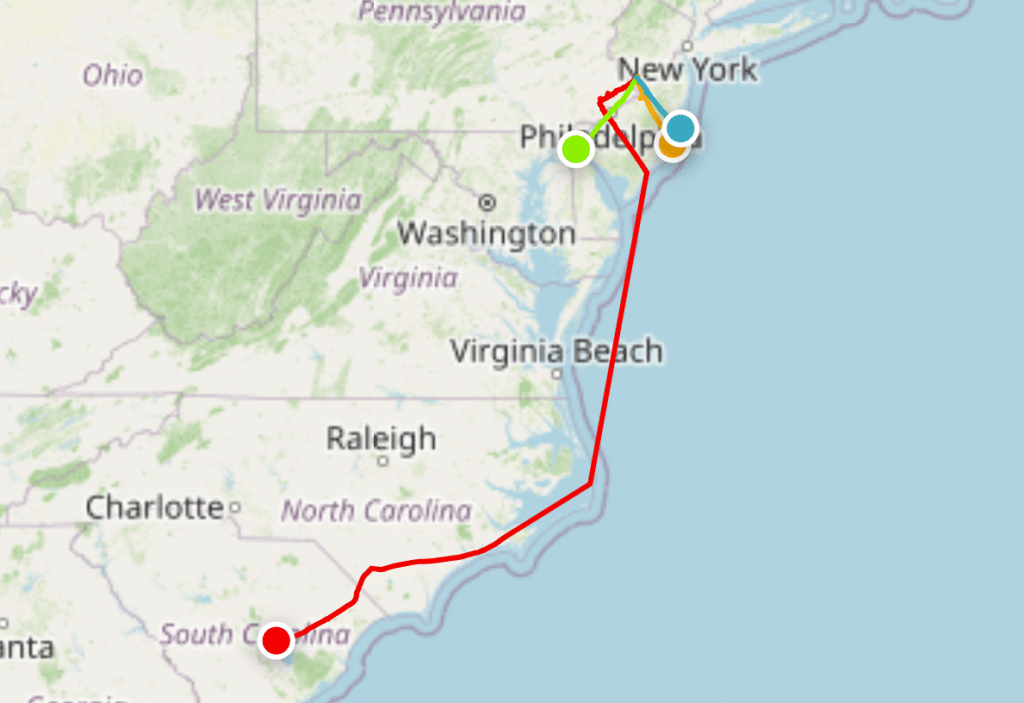
The Watershed Institute will be tracking the journey of four Monarch butterflies released from the Watershed Reserve October 2.
As of 10/16/26, one Monarch was detected near the Santee National Wildlife Refuge in South Carolina.
The Watershed Center will be closed on Saturday, October 24th until 4pm for a private event. Please visit us another time. The Halloween Night Hike will not be impacted.