
Finding something uncommon in a familiar place is always exciting. That is the case when two Blue Grosbeaks (Passerina caerulea) decided to reside at The Watershed Institute in Pennington, New Jersey, this summer. According to eBird, there were only three observations of Blue Grosbeaks on the Watershed Reserve between 1987 and 2022. Since 2023, that number has tripled. For anyone who knows the Reserve’s birding history, it’s a moment worth reflecting on.
Unlike the chickadees, cardinals, and robins that fill the Reserve’s trails throughout the year, Blue Grosbeaks are less common in Mercer County, occurring in low to moderate numbers between May and September. Preferring shrubby edges, overgrown fields, or brushy areas connecting forest to open land, their habitat has declined due to mowing and development. The fact that a pair chose to remain at the Reserve is quite significant.
Blue Grosbeaks are an indicator species: a bird whose presence (or absence) tells us something about the type of habitat, as well as habitat health. They are selective about where they nest, choosing early-successional brushy habitats. Finding Blue Grosbeaks means that a particular habitat is doing its job of providing sufficient native vegetation, insects for feeding young birds, and enough cover to raise their young. In other words, when Blue Grosbeaks settle in a given area, it means they are in support of that habitat.
The Watershed Institute was once an important site for birding enthusiasts. The Reserve has records of elusive birds such as Henslow’s Sparrows, Kentucky Warblers, Barn Owls, and Ruffed Grouse. However, various changes over time have altered habitats and some of that birding energy has faded. With fewer observations being made on the Reserve, it has received less recognition and popularity among birders.
That’s why this pair of Blue Grosbeaks matters beyond the enjoyment of the sighting itself. It serves as a reminder that this Reserve is still capable of supporting native bird species. If the habitat can host Blue Grosbeak, it’s worth a strong second look, and a call for a renewed birding presence. More visits, sightings, and attention to specific habitats that species depend on could help restore the reputation of the preserve as a place for birders to congregate. So, the next time you’re out on the trail, look a little closer at the brush. Who else might be hiding in there?
Article by Summer Photography Intern Charlie Ewing.
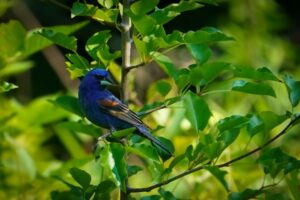
Blue Grosbeak (male) photographed at the Watershed Preserve by Charlie Ewing