
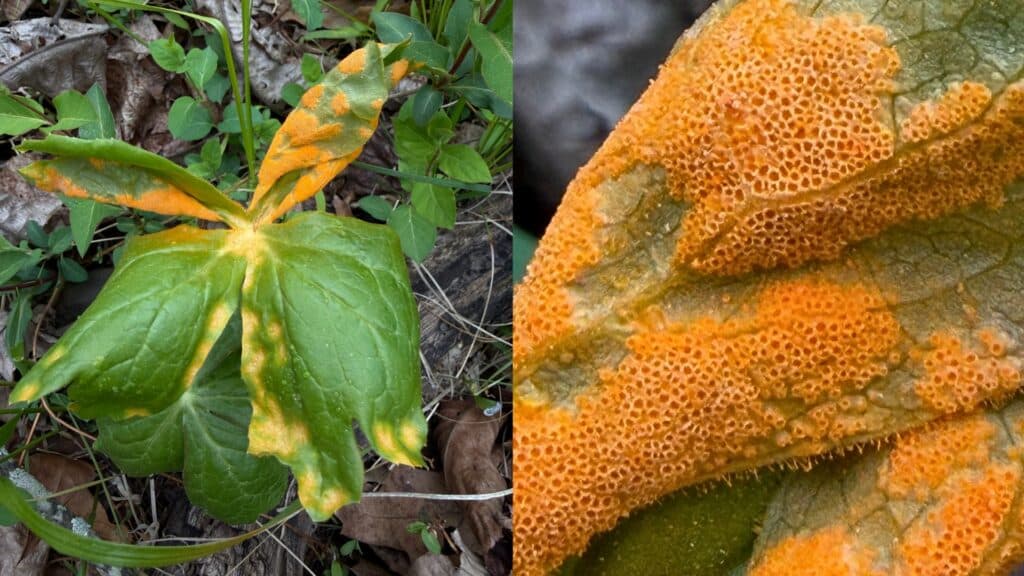
Mayapple rust (Allodus podophylli) is a fungal parasite that forms tiny, bright orange cup-like structures on mayapple leaves. Many rusts need two different host species to complete their life cycle, but in this case, mayapple rust relies on only one plant host, the Mayapple (Podophyllum peltatum), to complete its entire life cycle. Rusts that rely on only one host plant are called “autoecious”.
Mycologists have been studying mayapple rust for more than a century, and research indicates that this parasitic disease is common and widespread. The plant seems to tolerate the disease without permanent injury, which is why it is not a significant problem and does not require treatment. So instead of getting alarmed when you notice rust on the leaves, take a moment to observe the bizarre world of rust fungi.
Help us protect and conserve the biodiversity of our 950-acre reserve. Your support enables us to continue this mission, ensuring that future generations can enjoy clean water, vibrant habitats, and resilient communities.