
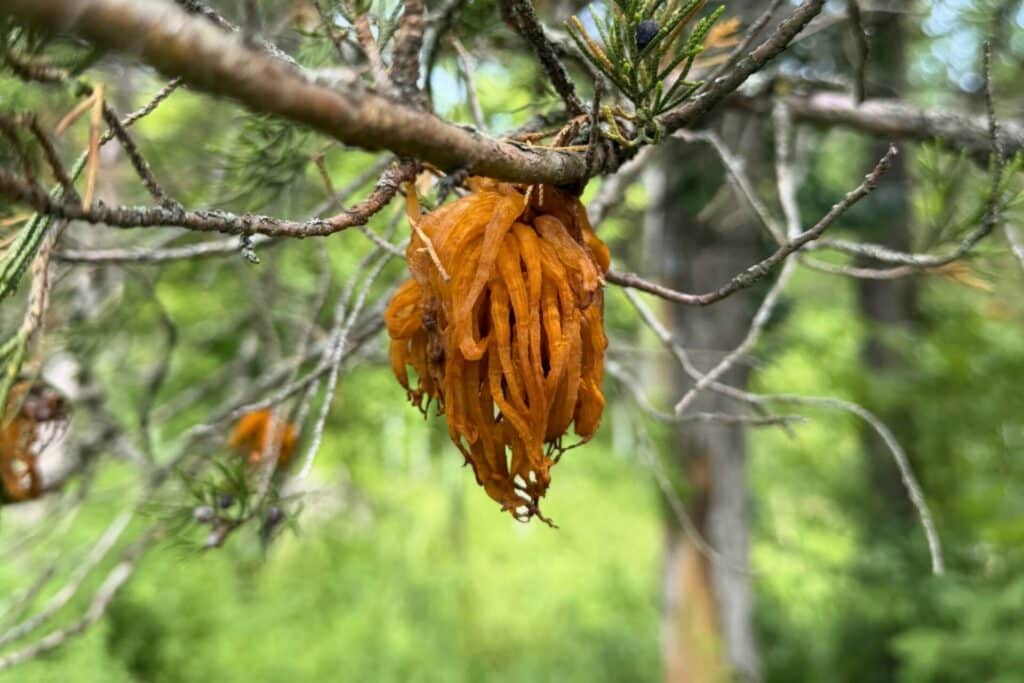
During your walk along the Hickory Loop Boardwalk, you may notice something very interesting (and a little strange-looking) growing on our Eastern Red Cedar trees (Juniperus virginiana). This is cedar-apple rust, a plant disease caused by the fungus Gymnosporangium juniperi-virginianae.
This fungus requires two different tree species to complete its life cycle, initially affecting Eastern Red Cedars and eventually apple trees. Early in the infection, it appears as small bumps on the woody portions of the plant. When exposed to the first rain of spring, these bumps absorb water and produce telial horns: gelatinous, orange masses like the ones seen in this photo. These structures release reproductive spores that travel through the air to infect apple trees.
The disease usually doesn’t kill the trees, but it can weaken them and reduce fruit production, especially in apple trees. While the fungus doesn’t directly kill cedars, it can still affect their health and appearance. Keeping a distance between cedar and apple trees can help reduce the spread.
Help us protect and conserve the biodiversity of our 950-acre reserve. Your support enables us to continue this mission, ensuring that future generations can enjoy clean water, vibrant habitats, and resilient communities.